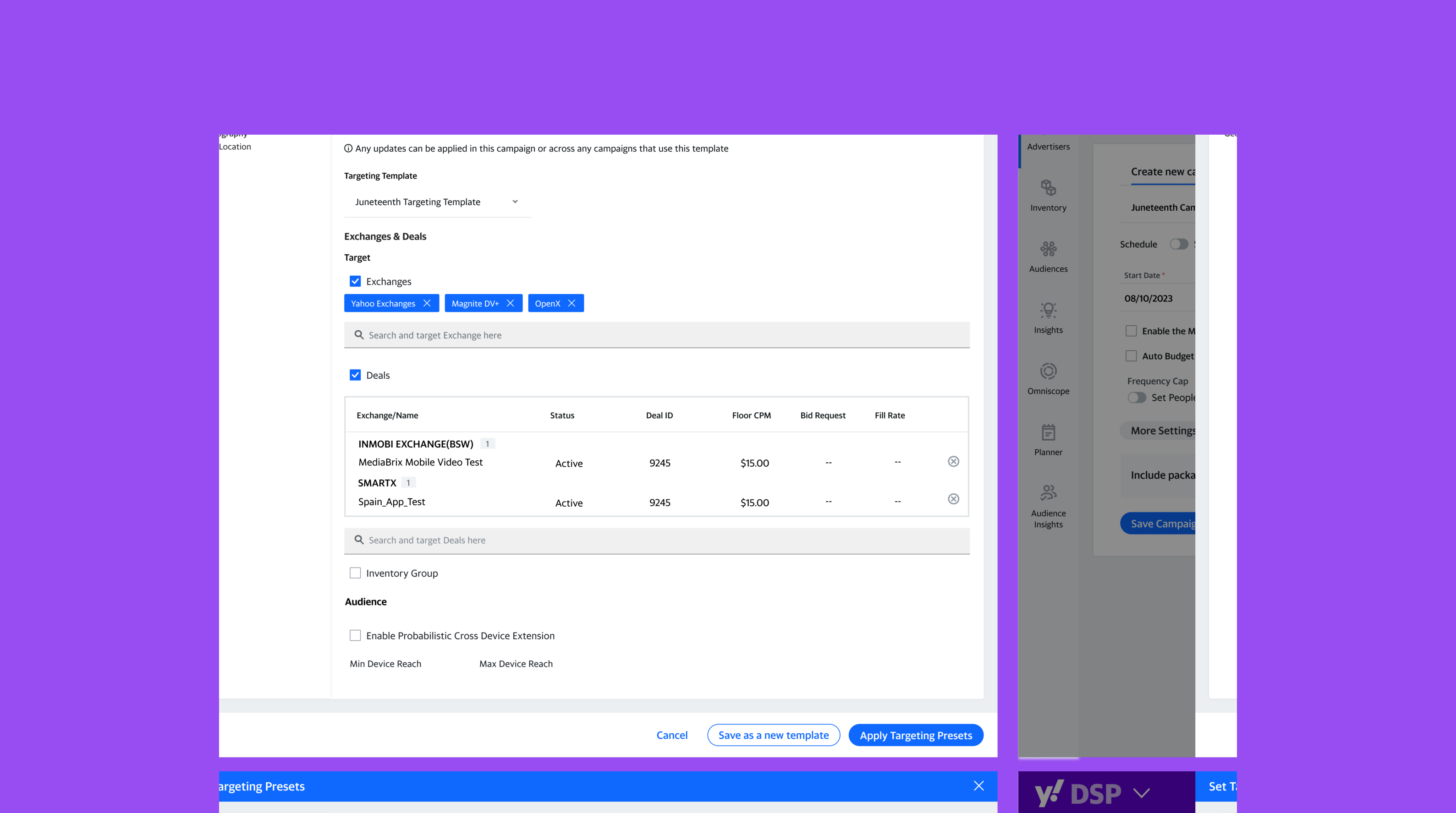
Enhance campaign setup workflow by reducing friction
The team wanted to redesign the existing Campaign Creation experience on Yahoo DSP (Demand Side Platform) for advertisers. As the Product Designer who leads this project, with the collaboration from PM and an UX Researcher for usability testing and preliminary user research, two key user flows were designed and iterated to meet user needs and goals identified from user research and usability study.
Role
UX Designer
Team
2 PMs
3 Designers
1 UX Researcher
2 Developers
Duration
8 Months
Achievement
Support one product into future roadmap
WHICH PRODUCT
Yahoo Ad-Platform
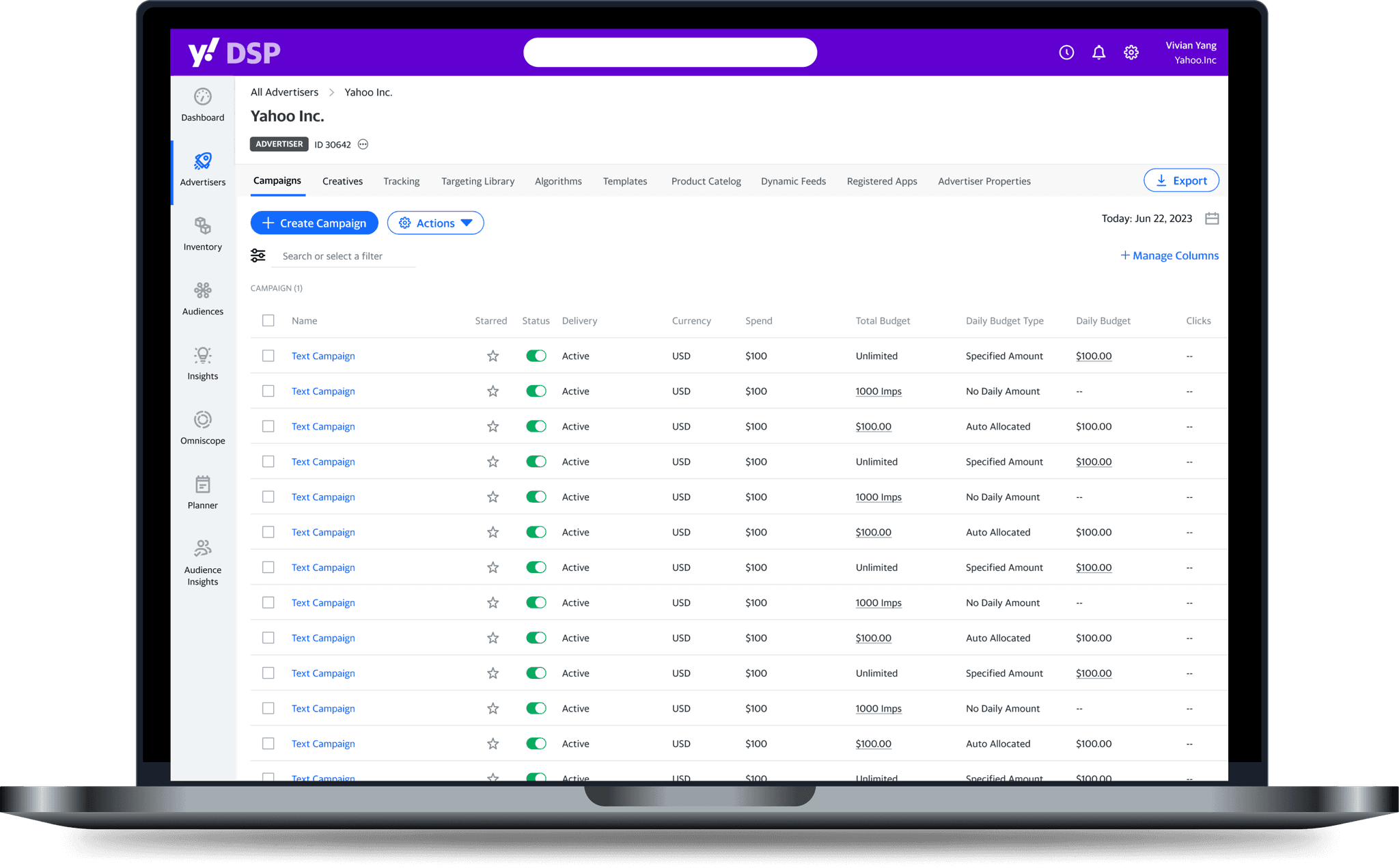
Yahoo DSP (Demand Side Platform) is an advertising technology platform that allows advertisers to programmatically purchase and manage digital ad inventory across various online advertising exchanges and publishers. With the Yahoo DSP, advertisers can access a wide range of ad formats, including display, video, native, and mobile.
BACKGROUND
I led the design to revamp current campaign setup process to increase overall product adoption rate
User Goal
To investigate current campaign setup friction to determine “smarter” solutions or features that better speed up campaign creation for users.
Business Goal
Focus heavily on BAU (Business as Usual) users and not overriding/ revamping existing features
DESIGN PROCESS

USER RESEARCH
Reviewed past studies to define questions for user-studies
To learn how users currently perceive Campaign Setup Process, we conducted user interviews to narrow down the most challenging part for users.
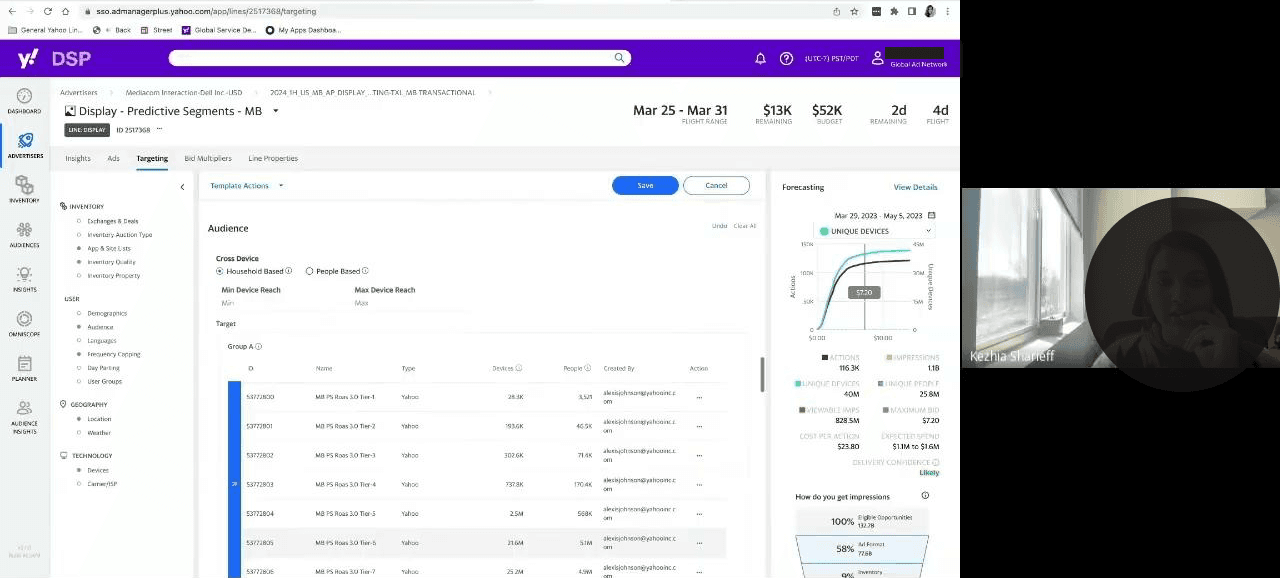
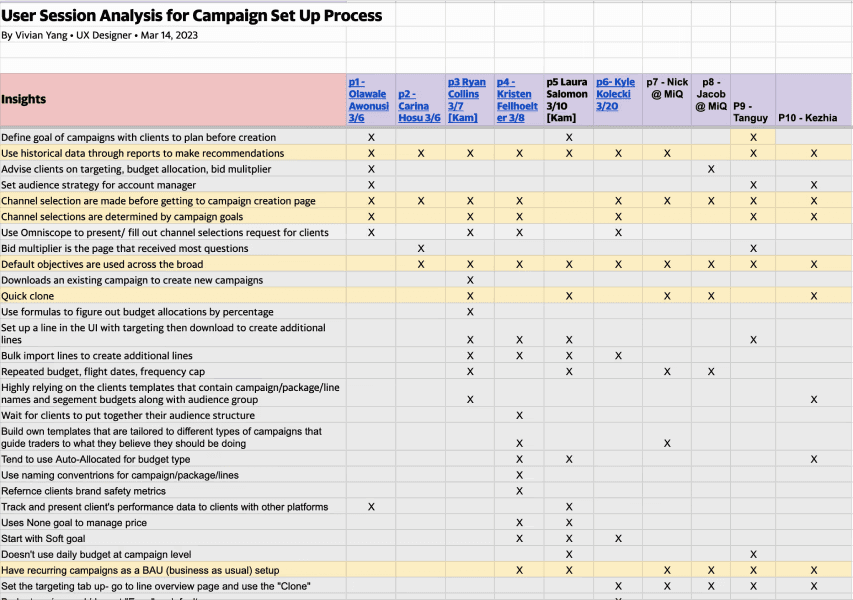
45-minute user interviews with 13 internal and external users were taken place in order to discover potential frictions on creating campaigns.
PROBLEM
Set up targeting causes issue for users
Users feel overwhelmed by the amount of information and layout of the interface, when auditing the current UI, we identified targeting as the most challenging page for users.
😫 Challenge 1
Scattered view to setup targeting
Users find it inconvenient to manually change targeting settings for each line.
😫 Challenge 2
No way to set frequently-used category
Feel overwhelmed by the amount of information and layout of the interface
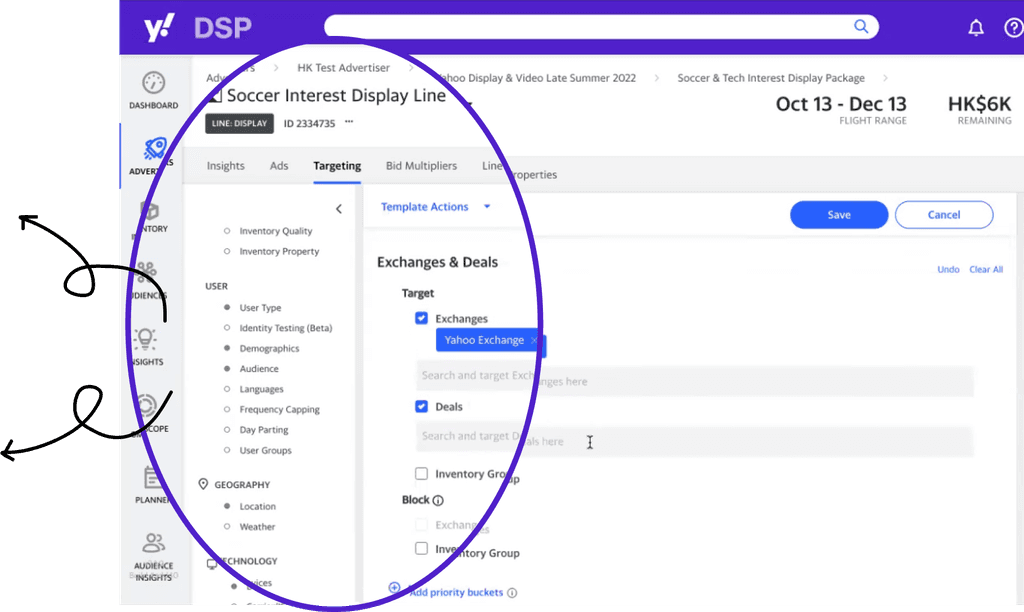
How Targeting Page looks like today
EMPATHIZE WITH USERS
Uncover the major campaign setup flow
Current segment building process requires leaving the current task undone within the workflow, resulting in a time-consuming and disruptive experience for users.
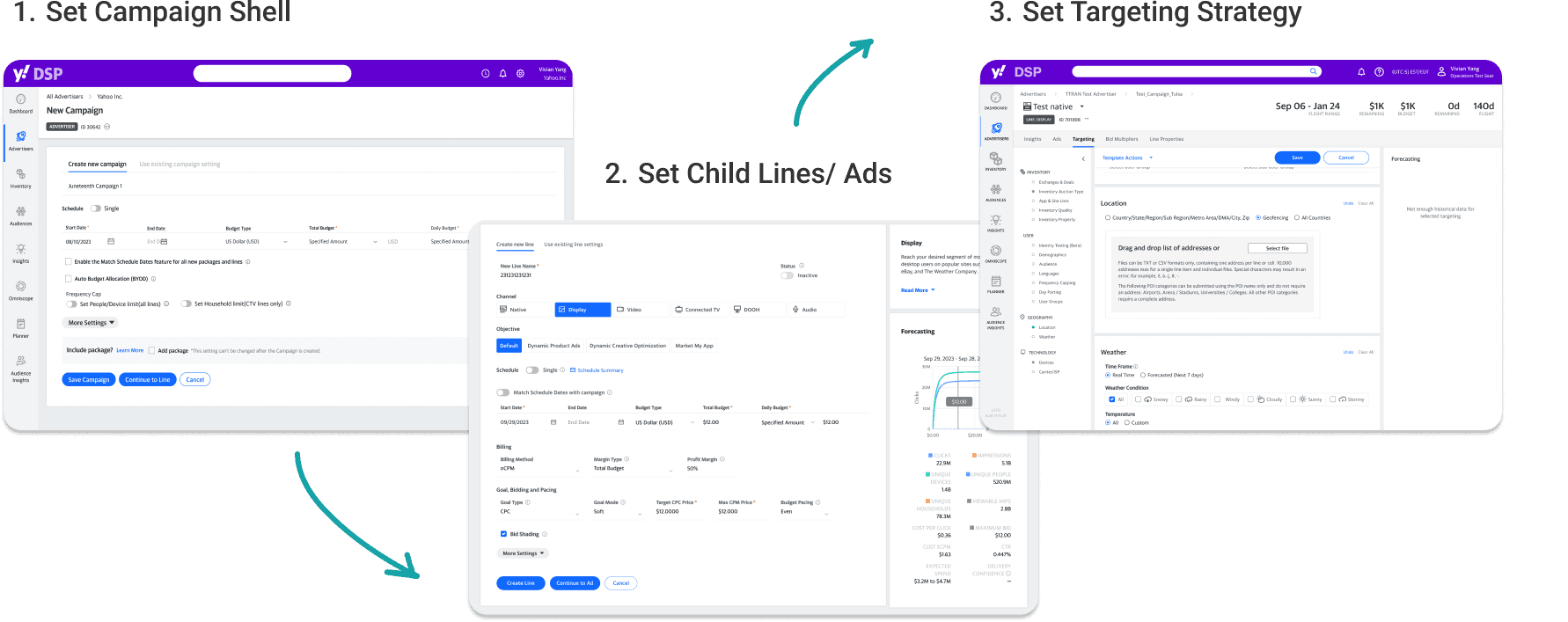
NARROWING DOWN THE FOCUS
How might we accelerate recurring campaign setup workflow for Account Strategist by easily setup targeting ?
HYPOTHESIS & VALIDATION
Research Insights
We spent some time sat together with the team(UX, PM, Dev, and QA) to talk about the goals, hypotheses, and constraints that helped to align everybody on the same page about what we want to achieve.
HYPOTHESIS & VALIDATION
Design Principles
In the early phase of this project, we conducted user research to identify the core problems and get a sense of how store partners perceive the existing prototype. The followings are what we learned:
1.Pre-built structure that can be tailored to campaign
We need to allow users to setup frequently used settings and access them during creation steps.
1.Pre-built structure that can be tailored to campaign
We need to allow users to setup frequently used settings and access them during creation steps.
1.Pre-built structure that can be tailored to campaign
We need to allow users to setup frequently used settings and access them during creation steps.
Final Solution
Line Targeting Preset
Allow users to inherent from Campaign (parent) to Lines (child) with same targeting strategy. This feature allow users to set similar targeting strategy across campaigns, saving over 50% of users time.

Final Solution
Streamlined
Process
Allow users to inherent from Campaign (parent) to Lines (child) with same targeting strategy. This feature allow users to set similar targeting strategy across campaigns, saving over 50% of users time.
Final Solution
Line Targeting Preset
Allow users to inherent from Campaign (parent) to Lines (child) with same targeting strategy. This feature allow users to set similar targeting strategy across campaigns, saving over 50% of users time.
IDEATION
Share concepts with
stakeholders
In the middle stage, I started to proposed low-fidelity concepts that heavily focused on the targeting barrier, as this is the most complex step that takes time.
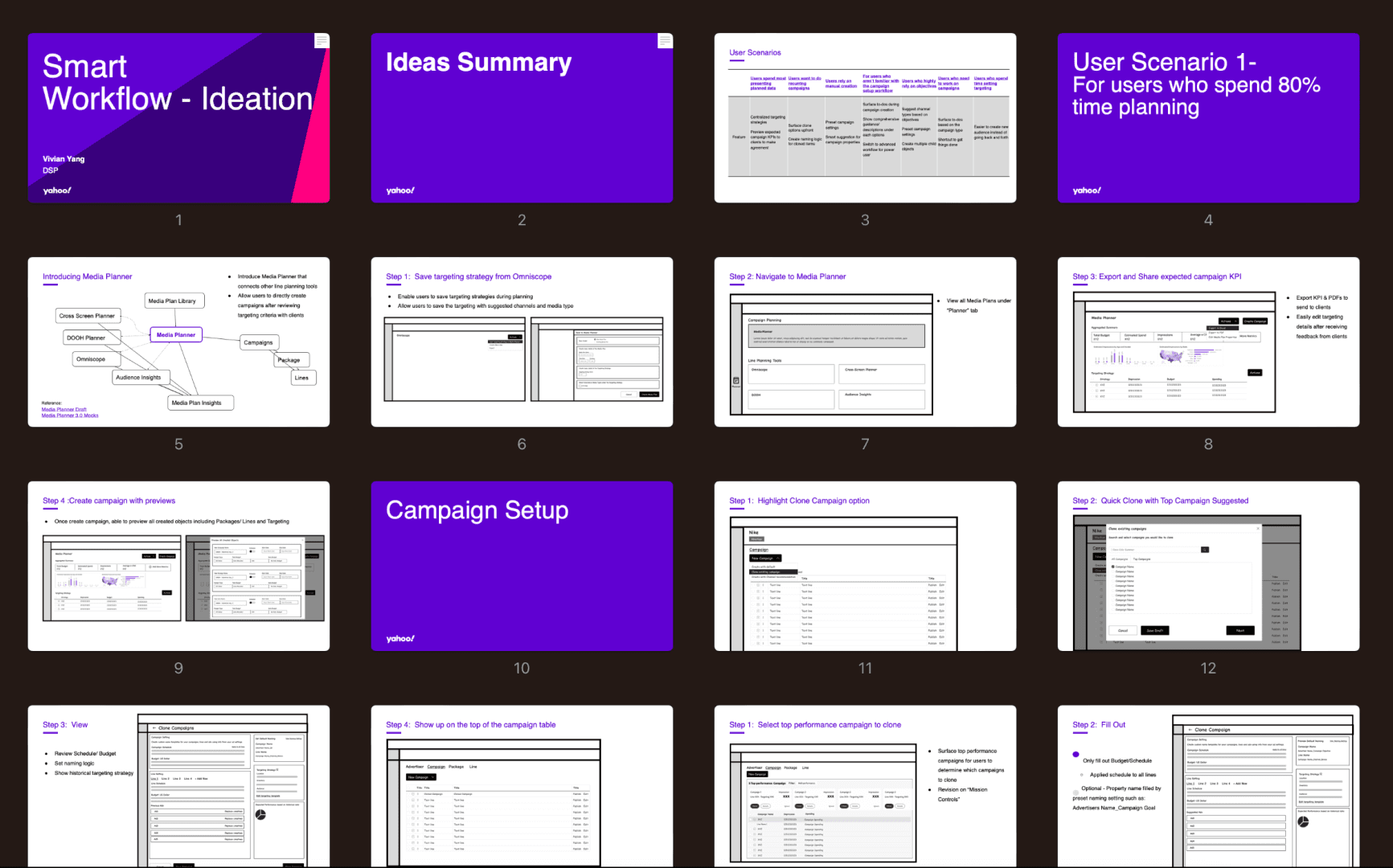
DESIGN IDEATION
Share concepts with
stakeholders
In the middle stage, I started to proposed low-fidelity concepts that heavily focused on the targeting barrier, as this is the most complex step that takes time.
IDEA PRIORTIZATION
Share concepts with
stakeholders
In the middle stage, I led the whiteboarding session, and heavily focused on the targeting barrier, as this is the most complex step that takes time. Finally, I shared the low-fidelity prototype with 2 Pms, 2 Designers, and 2 Engineers